
From My Bookshelf
Gordon S. Wood, The Creation of the American Republic, 1776-1787 (1969)

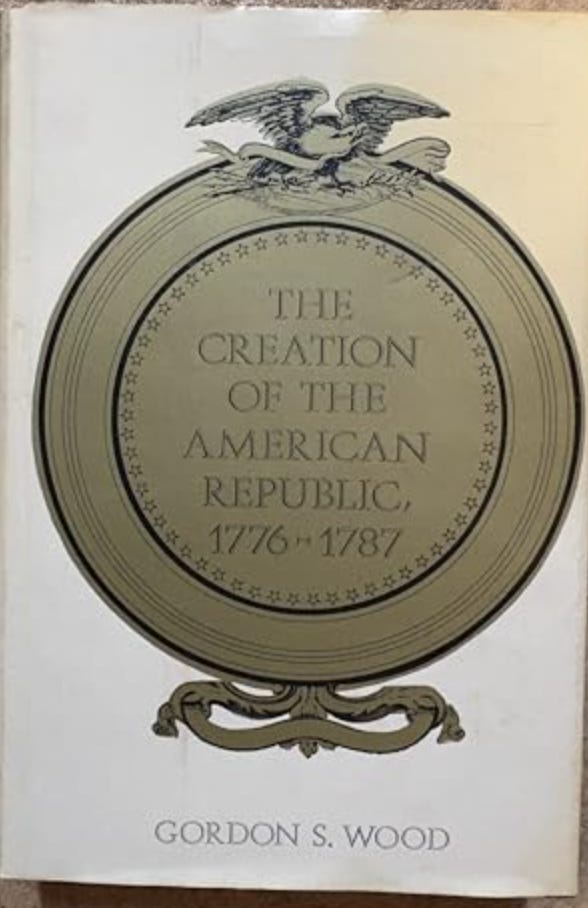
Since the renowned historian Gordon S. Wood’s tragic death earlier this month, many journalists have reflected on his enormously influential scholarship. As the nation marks the 250th anniversary of the Declaration of Independence and confronts an unstable political climate under the second Trump administration, two of Wood’s arguments, made in his book, The Creation of the American Republic, 1776-1787, are particularly relevant once more.
The first was that the American Revolution was driven by republicanism. According to Wood and his mentor, Bernard Bailyn, the founders were deeply concerned about how corruption and the centralization of power had historically destroyed republics. They feared that the same forces had emerged within the British Empire. As Wood explained, though the republican vision stood in opposition to abusive, centralized power, it was still elitist in nature: it relied on an independent class of wealthy, landed gentry—individuals free from political or economic pressure—to make decisions in the civic interest. Achieving civic virtue depended on empowering self-sufficient individuals who were wealthy enough to be difficult to corrupt. With the dangers of political corruption facing the country front and center, the need for leaders who prioritize civic virtue and the public good over self-interest is more urgent than ever before.
