
From My Bookshelf
Dorothy Ross, The Origins of American Social Science (1991)

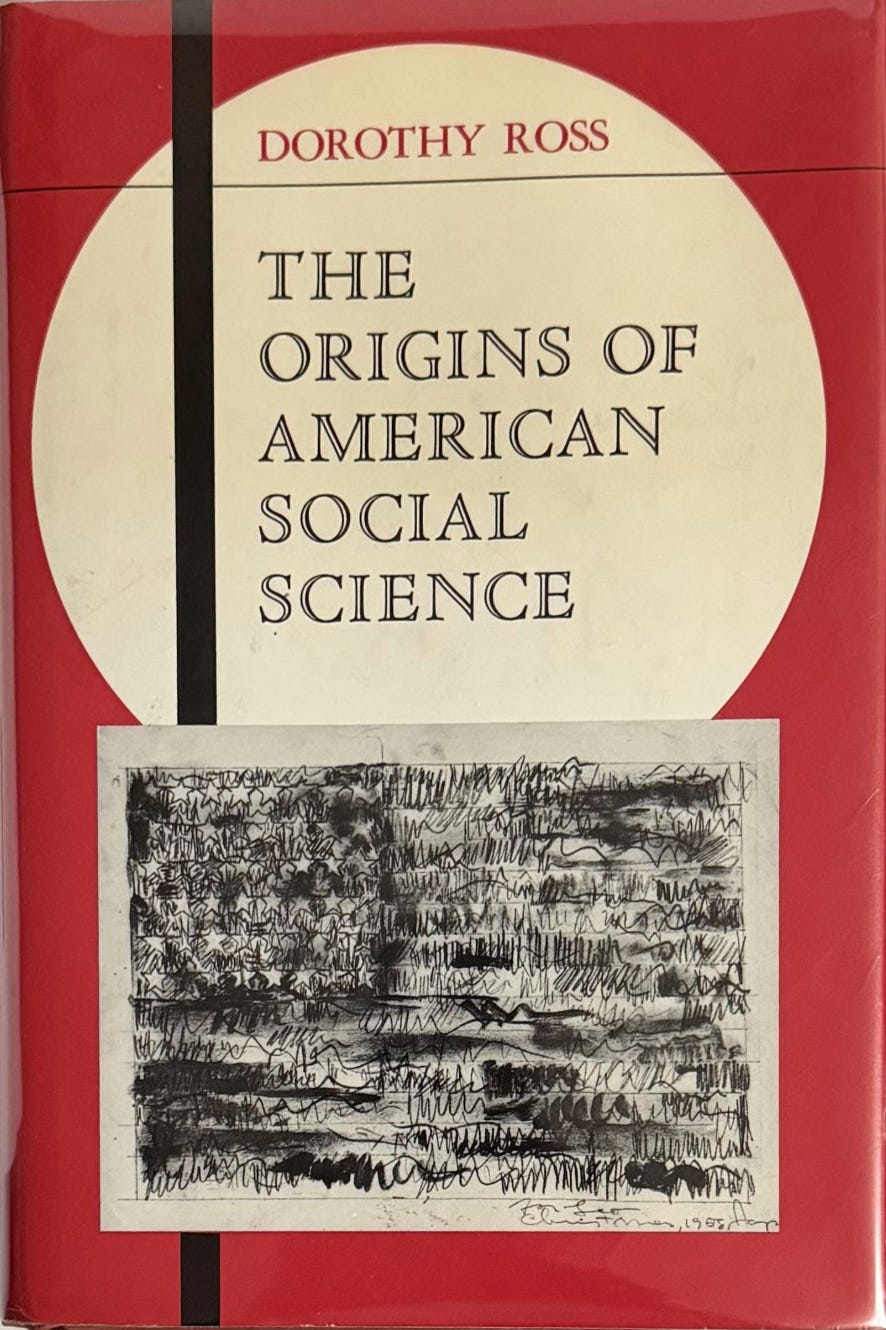
I was honored and privileged to study with the great intellectual historian Dorothy Ross during my graduate training at Johns Hopkins University (she was the second reader of my dissertation about Arkansas Congressman Wilbur Mills). Ross’ epic book on the development of the social sciences at the turn of the 20th century remains one of the most trenchant explorations of how the ideology of American exceptionalism, the belief that the country was not only better than all other nations but also free from problems like class conflict and mass poverty that other republics faced, stood in the way of clear-eyed analysis and reform. Her history lays out how economics, political science, and sociology acted as intellectual forces that protected and reinforced this ahistorical understanding of the United States.
Many disciplines took form during the post–Civil War and Gilded Age era, which was marked by immense strife. Battles over Reconstruction, mass labor unrest, and the challenges of immigration, industrialization, and urbanization raised profound questions about the stability of a republic barely a century old. Was America really so exceptional? Would it suffer the fate that brought down so many other powerful republics?
Older beliefs rooted in moral philosophy and Christianity no longer seemed to provide answers.
The founding generation of scholars, which included economist Richard T. Ely and sociologist William Graham Sumner, didn’t reach a consensus on how to respond to this crisis. This generation was divided into two camps in its approach to the republic and its fate. Some turned to German scholarship to develop a historical understanding of the country’s problems that pointed toward reform. But another cohort leaned into a laissez-faire philosophy regarding the country’s future. They clung to a confidence that America would continually progress and avoid the fate of great republics that collapsed over the course of world history.
