
Their Generation
Linda Gordon

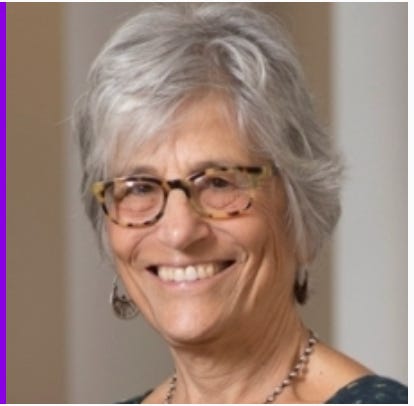
Linda Gordon is Florence Kelley Professor of History and University Professor of Humanities at NYU. Her books include Woman’s Body, Woman’s Right: The History of Birth Control in America, Heroes of Their Own Lives: The History and Politics of Family Violence, Pitied But Not Entitled: Single Mothers and the History of Welfare, The Great Arizona Orphan Abduction, Inge Morath: Magnum Legacy, The Second Coming of the KKK: The Ku Klux Klan of the 1920s and the American Political Tradition, Dorothea Lange: A Life beyond Limits, Feminism Unfinished: A Short, Surprising History of American Women’s Movements, and more. She has received numerous fellowships and book prizes, including being a two-time winner the Bancroft Prize for Best Book in U.S History.
For more on Linda Gordon’s work, see:
https://www.amacad.org/person/linda-gordon
Interview with Linda Gordon:
How did 1960s political activism shape your understanding of how to approach the study of American history?
Although I had done some volunteering at a SNCC office, the 1960s didn’t happen to me until I was in London, working on my dissertation between research trips to USSR and Poland. That’s where I had my first experience of protest against the Vietnam War—at the American embassy. (Police on horseback charged into the demonstrators, nowhere near me but scary nonetheless.) In London I saw a different New Left: one that was class conscious. Union workers joined in anti-war activism. My friends often criticized the Labour Party, hoping for stronger protests, but it was nevertheless a Party that identified with a working class. I was oblivious to sex/gender discrimination at the time. At college I was treated no differently than the guys (grad school at Yale changed that). And when I saw a poster at the LSE announcing a lecture on women’s issues, I thought, what are those and why would they be interesting? I didn’t attend.
Who were one or two of the key intellectual influences on your work?
My only individual intellectual mentor was one I barely knew, Eric Hobsbawm. I was at first a Russian/Ukrainian historian. My dissertation told the story of the16th century Zaporogian cossacks in what is today the Ukraine; at the time it was a lower-case word, ukraina, meaning borderland, not yet incorporated into the Russian empire. Between trips to Moscow, Warsaw and Cracow, I also used sources in London. There I summoned up the courage to reach out to Hobsbawm whose Primitive Rebels, a study of what he called “social bandits,” provided the only analytic framework I that helped me understand the significance of the cossacks. Then teaching at the University of London, Hobsbawm spoke with me about my topic and kindly found me a free office to work in, helpful particularly because it was near the British Museum with its extraordinary library of early-modern Polish and Russian materials. But my approach to history was primarily shaped by a collective intellectual experience: the junior and senior honors seminars at Swarthmore College. It was those seminars that made me an intellectual, influenced not only by faculty but even more by other students. In the honors program our courseload was reduced to 2 seminars a semester, but they were extraordinarily intensive; besides lengthy reading assignments, we wrote papers every week, read all the other students’ papers, and then discussed them, along with the scholarship on which they stood. This program modeled an analytic and interpretive approach to history that characterized my later work, and became a model of the best teaching that I tried to enact as a professor.
Which scholars from your own generational cohort—coming out of graduate school and moving up in the profession—have you been in conversation with throughout your career?
In my first job, at UMass-Boston, I was part of an informal group of scholars focused on uncovering and writing about the history of women. We met periodically, exchanging ideas and writings. Together with a few other scholars who spent time in Cambridge, including Mari Jo Buhle, Ellen Du Bois, Sara Evans, Kathryn Sklar, and Rochelle Goldberg Ziegler, we were reviving historical study of women that had long been in abeyance. One example sticks with me: when I found Alice Clark’s 1916 Working life of women in the seventeenth century in the Harvard library, I saw that it had not been checked out since the 1930s. (In those days library books had slips pasted inside the back cover that were stamped with each checkout date.) Only two senior historians-- Gerda Lerner and Anne Firor Scott—were publishing about women. Luckily I soon connected with a New Yorker who became my close friend, political and intellectual buddy, and co-editor of several books, Rosalyn Baxandall. Women’s history as a field soon exploded; at the University of Wisconsin where I taught from1984 to 1999, I directed some 15 dissertations in women’s history.
Was there a turning point in your career that you remember as especially critical?
