
Their Generation
Clayborn Carson

At a time when politicians are openly attacking the study of history, “Their Generation” goes back to the scholars who fundamentally transformed the field after the 1960s and, in doing so, changed how Americans understand themselves. These historians shattered narrow canons, introduced ignored voices to the center of the story, and confronted myths of a national history devoid of conflict and struggle. This ongoing series, available exclusively to paid subscribers of The Long View in my Friday newsletter, lets them speak for themselves, at a moment when historical truth is once again under threat.
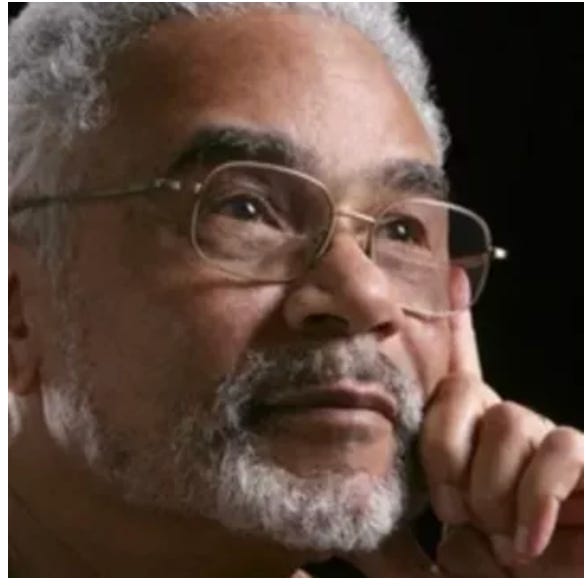
Clayborn Carson is the Martin Luther King Jr., Centennial Professor, Emeritus at Stanford University and the lead editor of the seven volumes of the Papers of Martin Luther King Jr. Carson founded and directed the King Research and Education Institute. He is the author of In Struggle: SNCC and the Black Awakening of the 1960s; Malcolm X: The FBI File; The Autobiography of Martin Luther King Jr.; Martin’s Dream: My Journey and the Legacy of Martin Luther King Jr. A Memoir, and many other landmark publications. In addition, he served as a senior advisor to the landmark PBS documentary, “Eyes on the Prize.”
My Interview with Clayborn Carson
1) How did the political activism in the 1960s shape your understanding of how to approach the study of American history?
Well, I guess it’s really how found about history and how it was changing during that time. The first person I met at a student conference was Dr. Carmichael who encouraged me to join the movement. And we were we remained friends for the rest of his life, actually. My last letter from him came right before he died. When he became more prominent in the movement, I had moved to Los Angeles. And so, we kind of reconnected there, and that’s where I got involved in movement activities, working with a group called the Nonviolent Action Committee, which was set up in Los Angeles. And it was through that that I became a journalist. I began to write for a newspaper called the L.A. Free Press. And you know being a newspaper reporter gave us an excuse to go up with someone and say, “I want to interview you.” And it was a great way for me to meet people in Los Angeles. That’s what I did and for the next couple of years. I guess it was about that time, and at UCLA, where the students were agitating for courses and things like that, and I met a professor, Gary Nash, in the department, and he invited me to do a section, informal. students didn’t have to attend. But they could come to my section. And they did and that also made me more familiar with what was going on with the history department there. And after I did that section, they invited me to, I guess it was during that section, I was already starting to take a few courses. I got my undergraduate degree there. Then I was encouraged to do graduate studies there. That was largely because of my computer knowledge. I did computer work for a number of historians, and there was a psychologist who wanted computer work. So, the computer work paid the bills and made me familiar with what a lot of historians were doing. Gradually, I moved toward the idea that maybe this might not do a bad career. I began taking courses and the rest is history, I guess.
2) Who were one or two of the key intellectual influences on your work?
St. Clair Drake, when I came to Stanford, was one. Gary Nash was another. He was writing a book about race relations in America. So, he was very interested, as a white historian, trying to, trying to deal with this issue. There was also a social psychologist I worked with, and helped him write his book about Black people, how a race issues affect social psychologists.
3) You published a seminal book on the Student Nonviolent Coordinating Committee (SNCC). How did you conceive of the best way to study such a decentralized organization and how did you envision that piece of research contributing to civil rights scholarship?
At first, I thought it was not a good subject for a thesis in college. I remember, I guess, it was Gary Nash, saying I this is something I could write journalism about, but I didn’t know I could get a doctorate. He said, by the time you finish, it’ll be history. He was right. In fact, it was a perfect time, because people in the movement were recognizing that the movement of the ‘60s was over. A few of them recognized the importance of setting up archives and saving their papers. Howard Zinn was one of the people who helped me a lot. He had written a book about SNCC, and I remember when I went around doing interviews with people who had worked with SNCC, he was extraordinarily gracious. He said, look I’ve got a lot of materials up in my attic, there’s a copy store down the street, you have my permission to take it down and make copies. So, in a way, I kind of capitalized on our generation’s interest. He’d already written a book about SNCC’s early days. With his help, I was able to get ahold of a lot more documents. The Braden’s also were very useful in that respect. Carl and Anne Brayden had set up an archive, and they were very helpful. So, I was encouraged to do it. The hardest thing was getting the history department to accept something so contemporary as history.
