
Their Generation
Dorothy Sue Cobble

At a time when politicians are openly attacking the study of history, “Their Generation” goes back to the scholars who fundamentally transformed the field after the 1960s and, in doing so, changed how Americans understand themselves. These historians shattered narrow canons, introduced ignored voices to the center of the story, and confronted myths of a national history devoid of conflict and struggle. This ongoing series, available exclusively to paid subscribers of The Long View in my Friday newsletter, lets them speak for themselves, at a moment when historical truth is once again under threat.
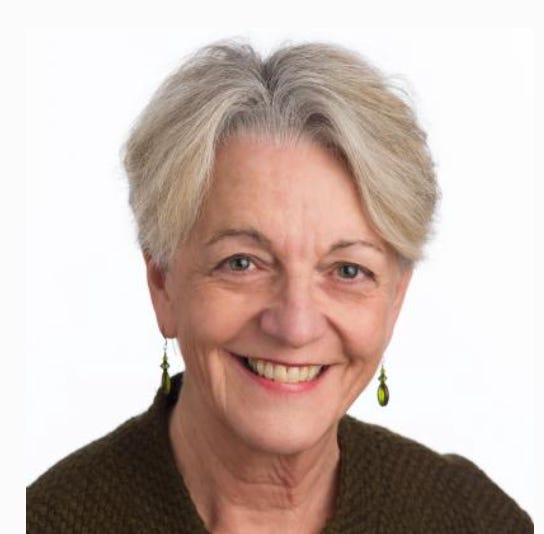
Dorothy Sue Cobble is an American historian, and a specialist in the historical and contemporary study of work, social movements, and social policy. A distinguished professor emerita of history and labor studies at Rutgers University, she is the author of multiple prize-winning books and articles. Her book, The Other Women’s Movement (2005) coined the term “labor feminism.” Her most recent book was For the Many: American Feminists and the Fight for Democratic Equality (Princeton University Press, 2021). Her essays appear in The Washington Post, Dissent, Ms. Magazine, Chronicle of Higher Education, Journal of American History, and other outlets. Dr. Cobble’s commentary can be heard on PBS’S American Experience, Minnesota Public Radio, National Public Radio, Jacobin Radio, Zagat Q&A, New Books Network, National History Center’s Washington History Seminar, Here’s Something Good I-Heart Radio, and the JFK Library Podcast.
For more on Dorothy Sue Cobble’s work, see:
https://www.dorothysuecobble.com/about
INTERVIEW WITH DOROTHY SUE COBBLE
How did the political activism of the 1960s shape your understanding of how to approach the study of American history?
The class and race injustices I encountered growing up in a blue-collar family in Atlanta Georgia in the 1950s and 1960s drew me to politics and to the study of history. By the time I graduated from high school in 1967 and headed north, I believed the social wrongs of intolerance and elitism – wrongs I had learned to condemn from my father’s union politics and my mother’s “all God’s children” version of Baptist teachings -- would not last. Studying history, I thought, could help me understand how societies change for the better and how people of all sorts could contribute to such an undertaking. The civil rights movement encouraged a sense of possibility and a belief in the agency and creativity of ordinary people. The women’s movement -- especially the guerrilla theatre, agitprop art wing that appealed to me -- offered an exhilarating release from accepted ways of being, sustained me as a writer, and provided a skeptical intellectual scaffolding for assessing the academic canon. History, as it unfolded around me, seemed a story of contestation in which bold ideas, courage, and decency mattered, and in which breaks and leaps forward were possible.
Who were one or two of the key intellectual influences on your work?
My curiosity – or my impatience – propelled me to read widely. As an undergraduate at Berkeley in the early 1970s, I was disappointed by the turgid prose and reductive categorizing of the oft-assigned academic texts, Marxist and non-Marxist, and preferred the story-telling and tragic-comic insight of fiction and essayists like Virginia Woolf and George Orwell. A Room of One’s Own and Homage to Catalonia were life-changing, out-of-class reads, as were W.E.B. Du Bois’s The Souls of Black Folks and Marshall McLuhan’s Understanding Media: The Extensions of Man.
In graduate school at Stanford, I appreciated E.P. Thompson’s literary, embodied approach to history writing and his expansive, always-in-process notions of class and class consciousness. Richard Hofstadter, Eric Hobsbawm, and C. Vann Woodward revealed the pleasures of biographically-inspired intellectual and political history. Social theorists like Daniel Bell, C. Wright Mills, William Julius Wilson, Anthony F. C. Wallace, and Arlie Hochschild informed my early thinking about economics and culture. Jonathan Cobb and Richard Sennett’s The Hidden Injuries of Class re-organized my intellectual and emotional world and left an indelible mark on how I thought about my own upbringing and how I wrote about working people.
Which scholars from your own generational cohort – coming out of graduate school and moving up in the profession – have you been in conversation with throughout your career?
Ruth Milkman, Michael Kazin, and Joanne Meyerowitz became valued friends and intellectual companions in graduate school and remain so. At Rutgers, in 1986, I met my husband, Michael Merrill, a labor educator and economic historian, who has read, championed, and raised questions about everything I have ever written. As an untenured labor studies faculty at Rutgers in the 1980s, I had the extraordinary luck of joining a small writing group of Rutgers’ women’s historians that included Mary S. Hartman, the late Dee Garrison, and Deborah Gray White. Their wisdoms about history, prose, university politics, and academic publishing proved indispensable to my career over the next few decades, as did the historical intelligence and sound editorial hand of Nancy Hewitt, who came to Rutgers in 1999.
