
Their Generation
Daniel Walkowitz

At a time when politicians are openly attacking the study of history, “Their Generation” goes back to the scholars who fundamentally transformed the field after the 1960s and, in doing so, changed how Americans understand themselves. These historians shattered narrow canons, introduced ignored voices to the center of the story, and confronted myths of a national history devoid of conflict and struggle. This ongoing series, available exclusively to paid subscribers of The Long View in my Friday newsletter, lets them speak for themselves, at a moment when historical truth is once again under threat.
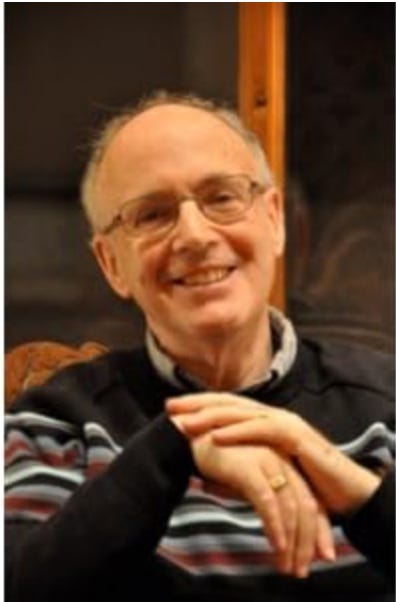
Daniel Walkowitz is Emeritus Professor of Social and Cultural Analysis and Emeritus Professor of History at New York University where he directed the Metropolitan Studies Program for 14 years, co-founded the graduate Program in Public History and served as the inaugural Director of College Honors. in nearly a dozen books, many articles and four films for public television he has worked to bring America’s past to both academic and broad public audiences. A social and cultural historian of the modern world, among his books are Worker City, Company Town: Iron and Cotton Worker Protest in Troy and Cohoes, New York, 1855-1884 (Illinois, 1978), which served as the basis for his PBS film, “Molders of Troy, Subsequently, with Lewis Siegelbaum, he published Workers of the Donbass Speak: Survival and Identity in the New Ukraine, 1989-1994 (SUNY, Albany, 1994), which was drawn from his research for and production of Perestroika from Below (Channel Four, UK). In addition to his book Working With Class: Social Workers and the Politics of Middle-Class Identity (North Carolina, 1999), and a series of transformative volumes on public history which he co-edited for a book series tied to his one-standing association with the Radical History Review, he published, City Folk: English Country Dance and the Politics of the Folk in Modern America (NYU Press, 2010/14 ). That book serves as the companion to the film, City Folk: Pinewoods Camp and the Story of English Country Dance in America (Smithsonian Institution Center for Folklife and Cultural Heritage, 2016), which he produced with Charlie Weber and Stephanie Smith. Finally, in 2018 he published an edited collection The Culture of Work in the Modern Era (Bloomsbury, 2018), and a book on the politics of heritage tourism, The Remembered and Forgotten Jewish World: Jewish Heritage Tourism in Europe and the United States (Rutgers University Press).
For more on Daniel Walkowitz’s work, see https://as.nyu.edu/faculty/daniel-walkowitz.html
1. How did your activism in the 1960s and 1970s shape your understanding of how to study and interpret American history?
As a red diaper baby I experienced the 1960s and 1970s as affirmation of the racial politics and activism I experienced growing up. I attended “commie camp,” and participated in left-oriented hootenannies and folk dance culture that celebrated proletarianism. I fondly recall my first peace march to Washington with SANE in 1958. In retrospect, it was much of the romance of communism that Vivian Gornick has described, but after a childhood in which I had to lead a secret life in suburban New Jersey schools and communities, it was liberating in 1960 to find a left community at the University of Rochester. Participation in CORE, SNCC and SDS did compel rethinking alliances across “color lines’ and gender politics and challenged “old” traditional CP cultural politics. My aunt was a Party secretary in New Jersey, but my parents and their comrade’ radical culture was patriarchal and pretty conventional. The New Left in Rochester — and elsewhere of course — divided between the political radicals who looked to theorist such as Herbert Marcuse, and “cultural radicals” like Norman O. Brown (“Loves Body”). Both famously debated at a junior faculty member’s home (Brown was at Rochester and one of Marcuse’s former students taught in the Rochester History Department.) This intellectual and political cauldron at Rochester in the 1960s (Judy and I were both undergraduates and graduate students there), which by the late 1960s also involved a nascent second generation feminist movement, made clear to me and my graduate cohort (even as the men remained patriarchal) that race, ethnic cultures, gender and complex narratives of daily life were stuff of a New Social and Cultural History.
2. Who were one or two of the key intellectual influences on your work?
At the University of Rochester, Haydn White and R.J. Kaufmann (a charismatic Shakespeare scholar who had moved into the History Department) ran an extracurricular seminar for a dozen inquisitive but alienated left undergraduates in the early 1960s in which I participated. The White and Kaufmann also attracted a distinguished left faculty that included Norman O, Brown, Loren Baritz )”Servants of Power”, Herbert Gutman, Eugene Genovese and Christopher Lasch, among others who specialized in areas outside American History.
Coming out of the Sputnik era, I was initially a Physics major, but early switched into English. I had been deeply involved in theater since the age of nine, both at the YMHA (Jewish theater) and in high school, and at Rochester directed the experimental theater group. English allowed me to further my interest in dramatic literature and theatre. But as noted above, I had also been (and remained) deeply involved with left politics and peace and civil rights protest since the mid-1950s. With the Vietnam War and Civil Rights protest swirling about me, I took an honors seminar in American Economic History in the spring of my Junior year. It was my initial foray into history, but the introduction to William Appleman Williams’ textbook profoundly framed my understanding of American history. The next fall i enrolled in Loren Baritiz’s transformative seminar in American Intellectual History. Baritz then invited me to stay at Rochester for a Phd in History (conveniently, I had just begun a relationship with first year student — Judy! So much for simple political trajectories). Baritz took me on as a student and I wrote 150 rambling pages of a dissertation on American cultural radicalism in the 1890s. The project was ungainly and Baritiz urged me to think of writing in social history about labor, which he recognized was close to my heart (My father had bee a labor organizer for the CP in Paterson textile mills in the 1930s). Baritz remained a mentor and friend (who briefly followed me to NYU in 1990 where he voted for my tenure), but the switch was made easier by the presence of a new member of the faculty who had arrived from Wisconsin — Herbert Gutman, who happily took me on as one of his first graduate students. Herb, as the doyen of the New Social History, remained a model for my work until his untimely death in 1985.
Briefly I would be remiss not to mention several other people in the years since have especially shaped my work. I have spent some of every year in London where many in the orbit of New Left Review and History Workshop Journal — Edward Thompson, Eric Hobsbawm, Stuart Hall and the collective around History Workshop Journal — constituted a regular and sustaining community of left support for my work. From our first encounter in 1972 until his too, untimely death in 1996. Raphael Samuel was a particularly charismatic and important comrade. Raphael was a person who appreciated and encouraged my work across social, oral and public history, including history in film and video.
In the three decades since Raphael’s death, a second person who has influenced my more recent revisiting of public history and entry into Jewish public history has been my former NYU colleague Barbara Kirschenblatt-Gimblitt, BKG’s work in the Warsaw Jewish Museum and in museum studies more generally has been critical to my present work.
3. Which scholars from your own generation, those who came out of graduate school and advanced through the profession alongside you, have you been most in conversation with throughout your career?
